Two Free Meals a Day for Poor Patients at Chittoor Government Hospital

₹0 raised of ₹36,00,000
0 donations · ₹36,00,000 to go
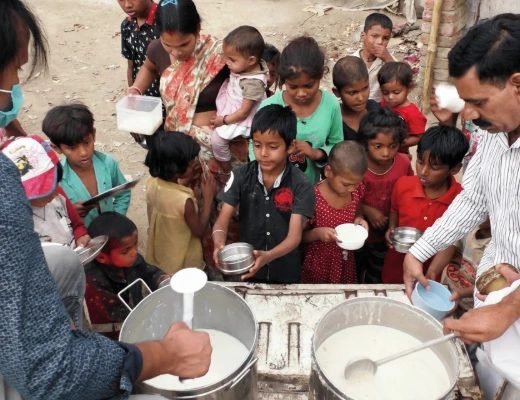
Every day our women's self-help groups cook and serve hot breakfast and lunch to around 300 poor patients at the Chittoor District Government Hospital – no questions asked.
About this campaign
Dear Sir / Madam
At 7:30 in the morning, while Chittoor town is still waking up, a quiet act of humanity begins inside the crowded corridors of the Chittoor District Government Hospital. The aroma of hot sambar and steaming rice does not come from a hotel, but from steel vessels carried by women in simple sarees. They are not hospital staff. They are volunteers of a small, grassroots rural organization.
For the poor patient lying on a floor bed with no attendant, for the old mother who sold her bangles to reach the hospital, for the daily wage worker who has not eaten since yesterday - these two meals a day are not just food. They are life and dignity.
Patients Who Travel 10 to 15 Kilometers With No Roads and No Buses
The Chittoor District Government Hospital is the last hope for thousands of poor families. Every day, more than 800 outpatients and 400 inpatients come here.
Most of these patients come from villages that are only 10 to 15 kilometers away from the hospital. The distance looks short on paper, but the reality is harsh. These villages do not have proper roads and there are no proper bus facilities.
During the rainy season, the mud roads become completely unusable. In summer, they are full of dust and stones. There is only one bus in the morning and one in the evening - if it comes at all. Many times, the bus does not come. Many patients have to walk all the way, or come on a bullock cart, or ask for a lift on someone else's bike. For an elderly person or a pregnant woman, even 10 kilometers becomes a 2-hour painful journey.
They are small farmers, agricultural labourers, disabled persons, single women, and old people with no family support. They come with a folded referral slip and an empty pocket. They borrow money just to reach the hospital, so where will they get money for food?
The government provides treatment, but for patients who have to stay for many days, food becomes a big crisis. One plate of rice outside the hospital costs Rs. 80 to Rs. 100. For a family earning Rs. 300 a day, it means choosing between medicine and a meal.
"We see patients taking tablets on an empty stomach. They become weak not because of the disease, but because of hunger. A hungry body cannot heal quickly," says a duty nurse.
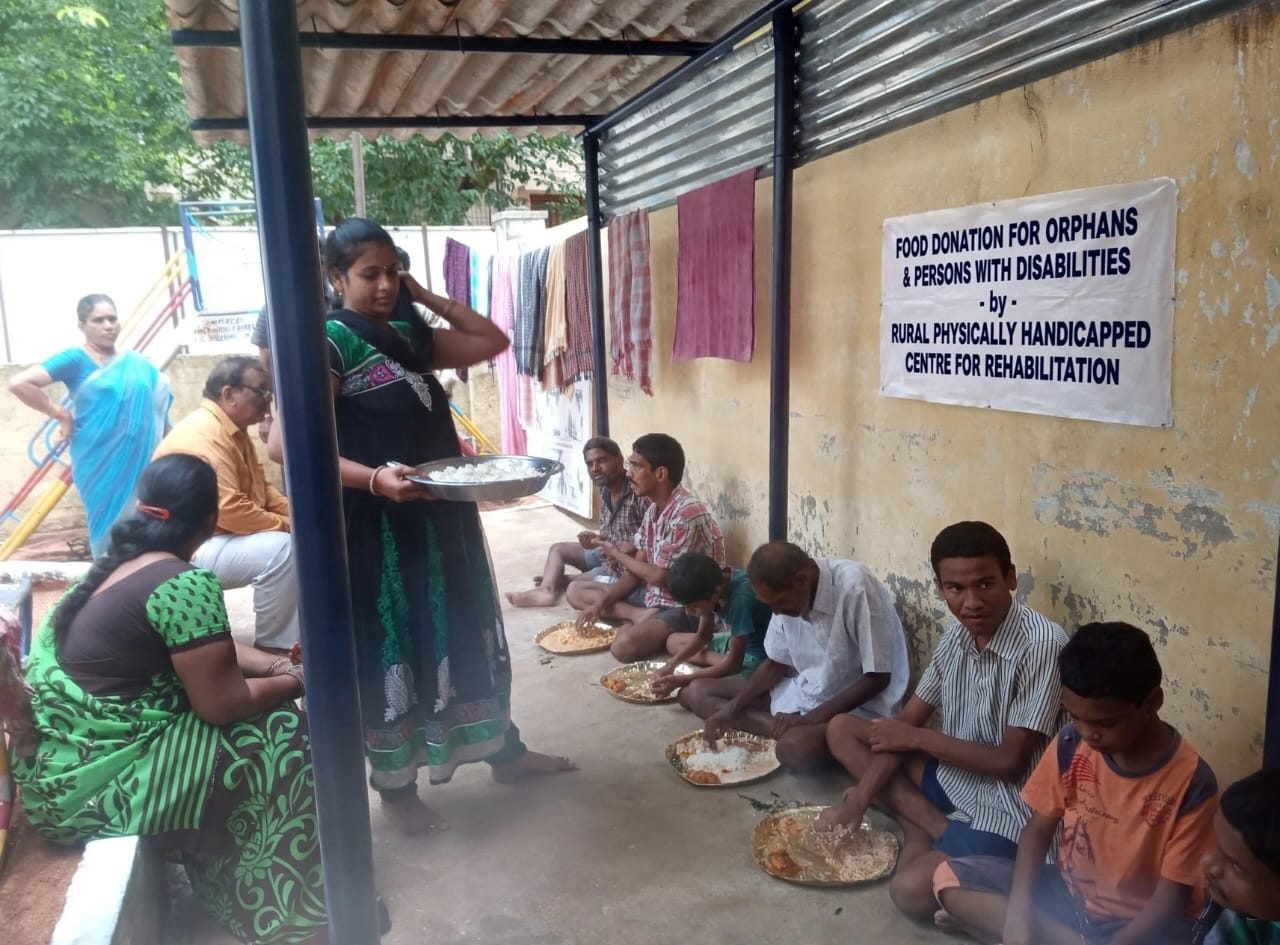
Seeing this pain, a local voluntary organization decided to take a vow - to provide free food twice a day, every day, without fail to the poorest patients. This initiative is led by Rural Physically Handicapped Centre for Rehabilitation.
One Kitchen, One Promise
This organization is not a big corporate NGO. It was born in a small village and is run by local people. It works with 100 women self-help groups. When the idea of hospital food donation was proposed, the women themselves came forward and said, "We will cook."
Today, the system works like clockwork.
At 4:00 AM, a small rented kitchen near the hospital lights up. Two women on a rotation basis start cooking. The menu is simple but nutritious, hygienic, and cooked with a mother's care: Rice, sambar with fresh vegetables, rasam, buttermilk, and pickle. On special days, they also give a boiled egg or a banana for anemic patients and new mothers.
By 7:00 AM, the food is packed into insulated steel drums and taken to the hospital by auto. Volunteers go ward by ward.
The morning round is from 8:00 AM to 9:30 AM. They cover general medicine, orthopaedic, maternity, dialysis, and TB wards. They do not ask for Aadhaar cards or income certificates. The only criteria is need. If you are on a hospital bed and you have no food, you will get food.
"We don't remember files, we remember faces," says a woman group leader. "The old man in bed no. 12 - his son left him three days ago. That young mother - her husband works far away. We serve them first."
The second round is from 12:30 PM to 2:00 PM. Again, hot, fresh food. For many patients, this second meal is what gives them the strength to face the night.
Every day, nearly 300 plates are served per meal. That means 600 meals a day, over 18,000 meals a month, and more than 2 lakh meals a year.
A Plate Full of Stories
Behind every plate is a story.
There is Munirathnam, 68, a small farmer. His village is 12 kilometers away. There is no bus and the road is broken. His son brought him on a bicycle. He fractured his leg and had only Rs. 150 in his pocket. He stayed for 18 days. For 18 days, he did not have to worry about food. With tears in his eyes, he said, "They fed me like my own daughter."
There is Parvathi, 24, who came walking from a village 10 kilometers away. There was no bus that day. She delivered a premature baby girl. She was weak and anemic. Volunteers gave her two meals a day with extra dal and ghee as advised by the doctor. Today, both mother and child are healthy. She now comes back to the hospital as a volunteer to serve other mothers.
There is a night no one will forget. Last November, during heavy rains, the mud roads to the villages were completely cut off. Buses stopped. The hospital canteen was closed. But the women volunteers walked two kilometers in the mud with vessels on their heads. Patients ate that day only because of them.
More Than Food
There is no waste in this program. Food is cooked in steel vessels and served in steel plates that are washed and reused. No plastic is used. Vegetables are sourced from local farmers and kitchen gardens grown by women members using natural farming.
The hospital administration now recognizes this service as an official support service. Doctors have noticed that patients who get regular, nutritious food recover 30% faster.
Why Twice a Day Matters
One meal is charity. Two meals a day is dignity.
A patient who has borrowed money and traveled 10 to 15 kilometers on a bad road with no bus will still go hungry at night with only one meal. With two meals a day, he can take medicines on time, sleep without stomach pain, and focus on healing. For a mother who has just given birth, two meals mean she doesn't have to send her husband out to find money for food. For an old man with no family, it means he is not alone.
One full day's cost - two meals for 300 people - is around Rs. 9,000 to Rs. 10,000. This includes rice, vegetables, oil, firewood, transport, and cleaning. For Rs. 3 lakh a month, 18,000 meals are served.
For many donors, it is a small amount. For a patient, it is life itself.
As one patient wrote on a scrap of paper after getting discharged: "You did not know my name. You did not ask my caste. You just gave me food when I had nothing. May your hands always be full."
In Chittoor, twice a day, those hands are indeed full - full of hot rice, full of hope, and full of the quiet power of rural women who decided to feed their own community.
If you walk into the hospital at 8:00 AM or at 1:00 PM, you will see them. No big banners, no loud speeches. Just steel drums, steel plates, and women serving with a smile, calling every patient "Anna" and "Akka."
This is what true service looks like.
You can be part of this mission. Donate a day's meal. Donate a month's groceries. Your donation will directly become a hot plate of rice for a hungry patient.
Thanks and Regards
Shankar Reddy Jampala
President
Rural Physically Handicapped Centre For Rehabilitation
How your donation helps
- Rice, sambar, rasam, buttermilk – cooked fresh every morning
- Eggs or bananas for anaemic patients and new mothers
- Ward-by-ward serving at 8 AM and 1 PM
- About 18,000 meals every month
Why donors trust us
- Registered since 1998Society Reg. 506/1998 · PAN AABTR2291K
- 80G tax receiptInstant e-receipt · Form 10BE every year
- Secure paymentsRazorpay · PCI-DSS · UPI, cards, netbanking
- Full transparencyCertificates & audited reports
Questions
Will I get an 80G tax receipt?
Yes. Tick “I want an 80G tax receipt” and add your PAN and address. You get an instant e-receipt and Form 10BE after the financial year.
How does monthly giving work?
Choose “Monthly” and approve the UPI AutoPay / card mandate once. The same amount is donated every month. You can cancel anytime by emailing info@rphcr.org.
Is my payment secure?
Payments are processed by Razorpay (PCI-DSS compliant). We never see your card or UPI PIN.
How will I know my money was used?
We share updates by email and publish certificates and audited accounts on our Transparency page.